10.10.2026
🎨 When colors speak louder than words: how creativity, play and movement bring back joy
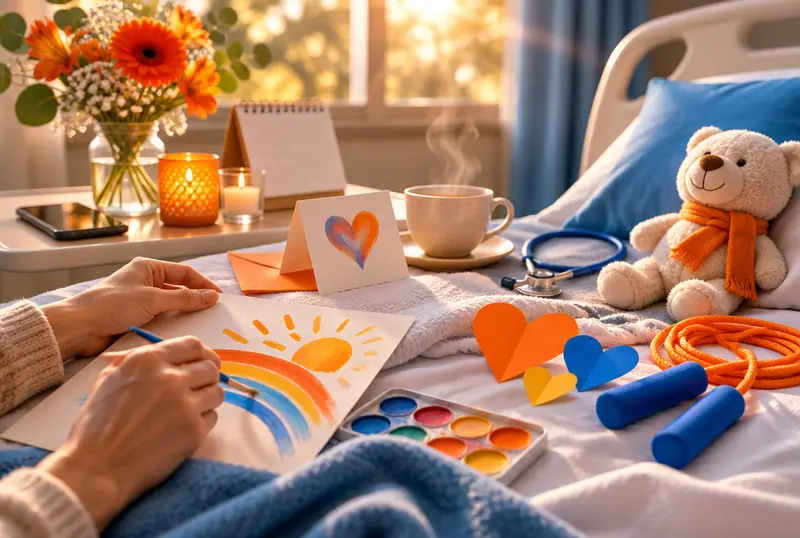
When treatment is behind and hospital corridors are left behind, a different stage begins for the family — long and quiet. Often it is here that the understanding comes that charity is not only about machines and medicines, but also about simple human activities that bring back the taste for life. Help for children during this period is measured not in IV drips, but in smiles, even timid ones. Rehabilitation after severe illnesses is a process where support for families comes to the fore, and donations turn into brushes, paints, balls and calm evenings without anxiety. Imagine: a child who for months saw only the white ceiling of a hospital room suddenly picks up soft clay. Fingers that still remember cold needles begin to knead the pliable material, and in this simple movement something important is born — a sense of control over one's body and the world around. Art sessions do not require talent or special skills, they do not give grades and do not compare works. What matters here is the process itself: the rustle of paper, the smell of gouache, the mixing of colors to the state of a dirty puddle that suddenly turns into a sunset over the sea. For children who have survived long treatment, such creativity becomes a way to speak out without words, when words are still too heavy or simply not there. Specialists notice that after several such meetings children begin to smile more often and more easily make contact with others. Play therapy works in a similar way, but through movement and rules. Board games, where you need to wait for your turn, negotiate and lose, restore communication skills that are erased over months of isolation. Soft blocks, simple puzzles, even ordinary hide-and-seek in a room — all these are small steps toward feeling like a child again, and not a patient. Volunteers who come to play often say that they themselves receive no less than the children. Adaptive physical education is a separate story, where caution meets the joy of movement. Simple exercises with ribbons, light balls or just walking along a narrow bench help restore coordination and strengthen muscles that have weakened during illness. No records are needed here, what matters here is every step that is given with effort, but brings pleasure from the fact that the body obeys again. Regular sessions work wonders, but not in a magical sense, but in the most ordinary one — gradually, day after day. Communication and support for families is another facet of this quiet work. Parents who have lived for years in the mode of hospitals and procedures also need a breather. Someone brings a ready lunch, someone just sits nearby and listens, without giving advice. Such help for the family is not conspicuous, but it is precisely this that helps not to break down and not to burn out. What can each of us do if there is no opportunity to donate large sums? You can set up a regular donation — let it be small, but predictable, so that the charity organization can plan sessions for months ahead. You can become a volunteer and devote a couple of hours a week to games or walks. You can simply tell others that fundraising is going not only for medicines, but also for brushes and modeling clay — and this also changes people's attitudes. Sometimes it is enough to bring a box of pencils or old board games that are gathering dust at home. The most valuable thing in these simple practices is their accessibility and repeatability. There is no need to wait for inspiration or a special occasion to start helping. Therapy through creativity and movement does not replace medical rehabilitation, but goes hand in hand with it, filling those voids that no doctor can heal. When a child for the first time in a long while picks up a chalk himself and draws a crooked rainbow, that is a small victory. When a parent for the first time in a month calmly drinks tea while someone plays with their child, that is also a victory. And these victories become more numerous when there are those nearby who are ready to help — with deeds, time, attention or a regular small contribution.