Child Rehabilitation After Serious Illness: Why It Matters
When people think about helping a seriously ill child, they usually think of the big moments: the diagnosis, the operation, the course of chemotherapy. But for many children, treatment does not end when they leave the hospital. What comes next, rehabilitation, can last months or years and is often just as important for the child's future.
This article explains what rehabilitation usually involves, why it matters, what makes it expensive and how donors can help. It is general information only. Decisions about therapy are always made by doctors and specialists together with the family.
What rehabilitation means for a child
Rehabilitation is a set of therapies that help a child regain, develop or maintain abilities affected by illness or treatment. Depending on the situation, it may focus on movement, strength, balance, speech, eating, breathing, concentration or emotional wellbeing.
For a child, rehabilitation is not only about recovery. Children are still growing and developing, so therapy also helps them reach the next stages of development: sitting, walking, speaking, playing with others and eventually going to school.
When children may need rehabilitation
Rehabilitation can be part of care in many situations, for example:
- After cancer treatment, when surgery, chemotherapy or long hospital stays have weakened muscles or affected movement.
- After heart surgery, as part of a gradual return to activity under medical supervision.
- In neuromuscular diseases such as SMA, where regular physiotherapy is often part of long-term care.
- After brain or spine injuries and operations, to support motor and cognitive functions.
- In rare genetic conditions, where therapy may be needed throughout childhood.
- In premature babies with developmental delays.
What rehabilitation usually includes
Every plan is individual, but these are common elements:
Physiotherapy
Exercises that improve movement, strength, posture and coordination. For many children, physiotherapy takes place several times a week over a long period.
Speech and swallowing therapy
Help with speech, communication and sometimes with eating and swallowing, which can be affected by illness or treatment.
Occupational therapy
Practical training in everyday activities such as dressing, holding a spoon or writing, adapted to the child's age.
Psychological and neuropsychological support
Help with emotions, memory, attention and returning to kindergarten or school after a long break.
Intensive rehabilitation stays
Some children attend intensive programmes at specialised centres, where several therapies are combined over one or more weeks. Some of these centres are in other countries.
Equipment
Orthoses, special seats, standing frames, walkers, wheelchairs, breathing devices or communication aids. Children grow, so equipment often has to be replaced.
Why rehabilitation is so expensive
Families are often surprised by how quickly rehabilitation costs add up. The main reasons are:
- Duration. Rehabilitation is rarely a single event. It may continue for years.
- Frequency. Many sessions per week, sometimes with several different specialists.
- Limited access. Publicly funded rehabilitation may have waiting lists or limits on the number of sessions, so families sometimes pay privately to avoid gaps.
- Specialised centres. Intensive programmes and travel to them, including accommodation, can be costly.
- Growth. Equipment that fits a child today may be too small in a year.
The exact costs depend on the country, the child's needs and the type of therapy. A fundraiser for rehabilitation usually describes what the money is for, for example a series of sessions, a stay at a centre or a specific piece of equipment.
Rehabilitation at home
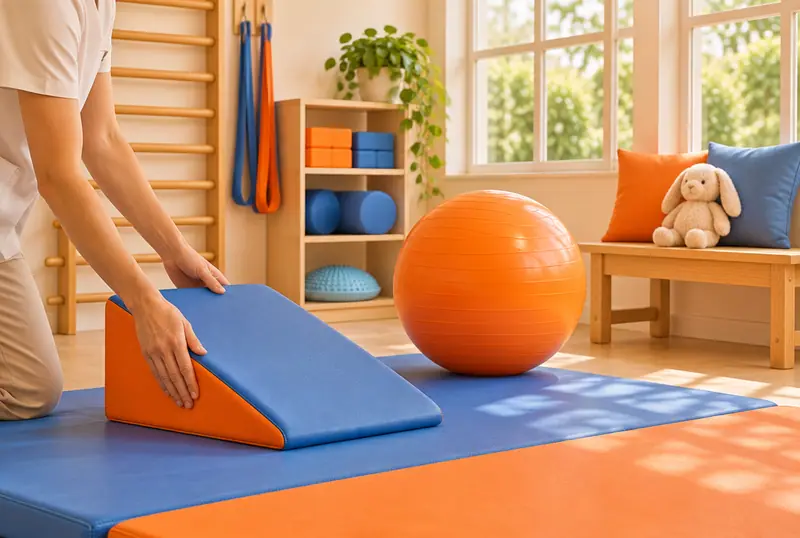
Therapy does not stop when a session ends. Therapists often show parents exercises to continue at home, and daily practice becomes part of family life. This takes time, patience and sometimes simple equipment, such as mats, balls or supports. It also means that one parent may need to reduce working hours, which adds financial pressure. Families who manage this routine for months or years deserve recognition and support, because so much of a child's progress happens quietly, at home, between appointments.
Why continuity matters
Parents and therapists often stress that regular therapy matters more than occasional intensive bursts. Breaks in rehabilitation can make progress harder, and for some conditions regular work helps maintain abilities the child already has. That is why steady support, including monthly donations, can be especially valuable for rehabilitation fundraisers.
How donors can help
- Donate to a rehabilitation fundraiser. Even small amounts help pay for individual sessions.
- Set up a monthly donation. Regular support matches the regular nature of therapy.
- Share the fundraiser. Rehabilitation stories are often less dramatic than urgent surgery, so they need extra visibility.
- Offer practical help. Driving a family to therapy or helping with siblings can make a big difference.
Frequently asked questions
Is rehabilitation covered by public healthcare?
In many countries, part of rehabilitation is publicly funded, but access, waiting times and limits vary. Families often combine public care with privately paid therapy. Check the rules in your country.
How long does a child's rehabilitation last?
It depends entirely on the diagnosis and the child's progress. For some children it is a few months, for others it continues throughout childhood.
Can rehabilitation take place abroad?
Yes, some families travel to specialised centres in other countries for intensive programmes. Such decisions should always be made together with the child's doctors.
Can I donate for a specific piece of equipment?
If a fundraiser is collecting for equipment, its description will usually say so. You can also contact the foundation to ask about current needs.
Help a child take the next step
Rehabilitation is often where hard-won treatment results turn into everyday life: first steps, first words, a return to school. Look through our current fundraisers to find children who need support for therapy, or read more about how to help. Steady support can carry a child a long way.