When Colors Speak Louder Than Words: How Drawing, Movement, and Play Bring Life Back 💫
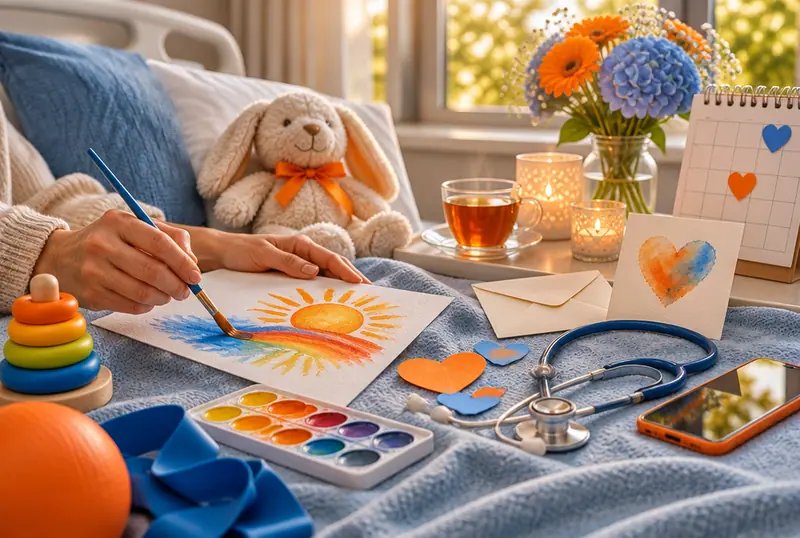
Recovery after a serious illness is not just about IV drips and long hours in a hospital room. It is also about quiet activities that gradually bring a child back to normal life. When a child picks up a brush, they are not just mixing paints — they are learning to feel their fingers again, control movement, and express what they cannot say out loud. Such supportive practices have become an important part of modern rehabilitation and care for children. For many families facing long-term treatment, art therapy becomes a breath of fresh air within hospital walls. One stroke, another — and suddenly a bright sun appears on the paper, something that was so missing in the room. Charity in this area often involves not only raising funds for medicine but also organizing these quiet yet important activities. Donations from caring people help pay for specialists who conduct art sessions and adaptive physical education classes. Supporting families in such moments is not just financial help but a chance to breathe out and realize that the child is smiling again. Games, surprisingly, also work as a powerful recovery tool. When a child puts together a puzzle or builds a tower of blocks, they train fine motor skills, attention, and patience — skills that often suffer after long periods of immobility. Adaptive physical education, in turn, helps restore muscle tone and coordination, but here the result is not as important as the process itself: the child learns to trust their body again. Volunteers who come to play with children or just talk become a window to the outside world for them, a world without procedures and injections. Ordinary communication sometimes heals no less than medicine, because it brings back a sense of normalcy. One charity organization I know set up a small clay modeling workshop for children. Kids who had not left their rooms for weeks happily got their hands dirty and created funny little animals. This form of help is not loud, does not require complex reports, but is incredibly alive. Raising funds for such initiatives often seems less urgent to people than buying medicine, but in reality it is no less important. A regular donation, even a small one, can provide a whole group of children with activities for a month. A person who wants to help does not necessarily have to donate large sums: they can offer their skills — for example, teach children to draw or play the guitar. Volunteering in this area often requires not special education but simple human presence and a desire to be there. Sometimes it is enough to just come and read a book aloud or watch a cartoon together. Such informational support — when you tell friends about the importance of rehabilitation activities — also works as real help. The more people know that recovery can be joyful, the more chances families have for a full life after the hospital. I have seen children who initially refused any exercises happily start dancing to music during adaptive physical education. This is not magic — it is well-organized rehabilitation that includes play and creativity. When a child laughs during an activity, they are not thinking about illness; they are simply living. And the main thing is that anyone can organize such help — from an individual to a small company that decides to donate art supplies. Supporting families during this period is also an opportunity for parents to rest a little, knowing that their child is being cared for by professionals. Once I witnessed how after an art therapy session, a mother of a boy smiled for the first time in a month — she saw that her son could hold a pencil again. This is what these practices are for: they bring back hope and small daily victories. Helping children in this form is not a one-time initiative but a long and patient journey. But anyone who has seen at least once how a child rejoices at a drawing they made with their own hands understands: it works.